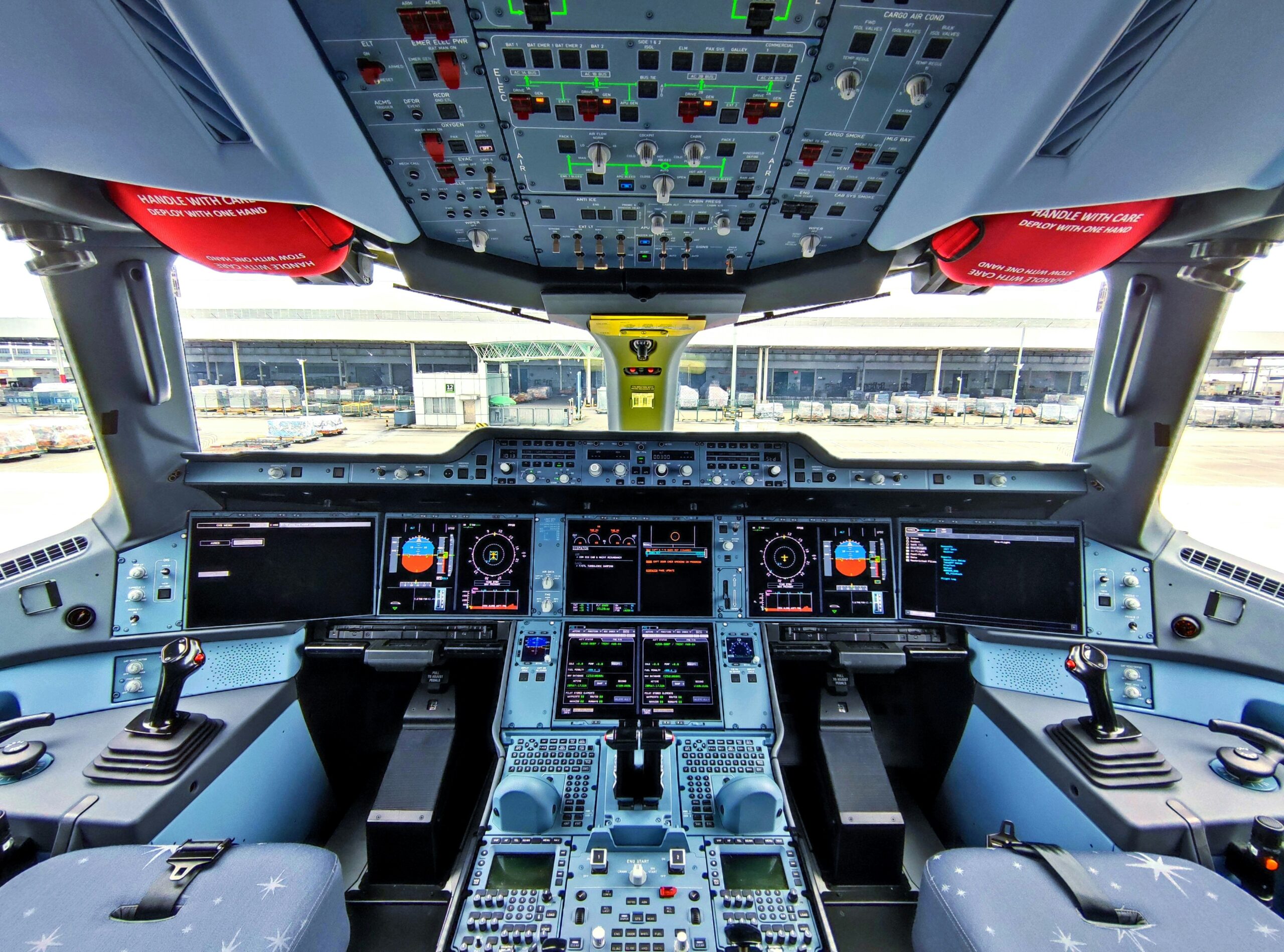
How to Become a Pilot in Europe
How to become a pilot in Europe is one of the most common questions asked by people interested in aviation careers. It is not easy, and it is definitely not cheap, but it is a clear process. Under EASA rules, most future airline pilots start by checking whether they can obtain a Class 1 medical certificate, then choose a training route, complete their flight training, and build toward their first airline job. The full ATPL normally comes later, after enough flight experience has been gained.
That matters because a lot of people search for “how to become a pilot” and end up reading articles that are either too vague or too American. Europe works differently. Licences, medical rules, and training standards are built around EASA regulation, and that changes what schools require, what airlines expect, and what the journey actually looks like.
There is also a long-term reason why this career keeps attracting attention. Boeing’s 2025 Pilot and Technician Outlook projects demand for 660,000 new pilots worldwide over the next 20 years. That does not mean every graduate walks straight into an airline seat, but it does show that commercial aviation still expects major staffing demand over the long run.
Table of Contents
Pilot Training Overview
| Step | What happens | Typical time |
|---|---|---|
| Class 1 Medical | Medical exam required for professional training | 1 day |
| Choose training route | Integrated, modular, or cadet programme | weeks |
| Pilot training | Theory, simulator and flight training | 18–24 months |
| First airline job | Entry level First Officer position | varies |
| Full ATPL | Achieved after reaching 1500 flight hours | several years |
Start with the medical, not the dream
The first serious step is not choosing a uniform, a flight school, or an airline fantasy. It is checking whether you can obtain a Class 1 medical certificate. For professional pilot licences such as CPL, MPL, and ATPL, EASA requires a valid Class 1 medical. EASA also states that the initial Class 1 examination can only be performed at an approved Aero-Medical Centre, or AeMC.
This is one of the biggest mistakes future pilots make. They spend months comparing schools and salaries before confirming that they can actually pass the medical standard needed for the professional route. That does not mean you need “perfect” vision or superhero genetics. What it means is that you should get clarity early, because the medical question affects everything that comes after it.
Understand the licence ladder first
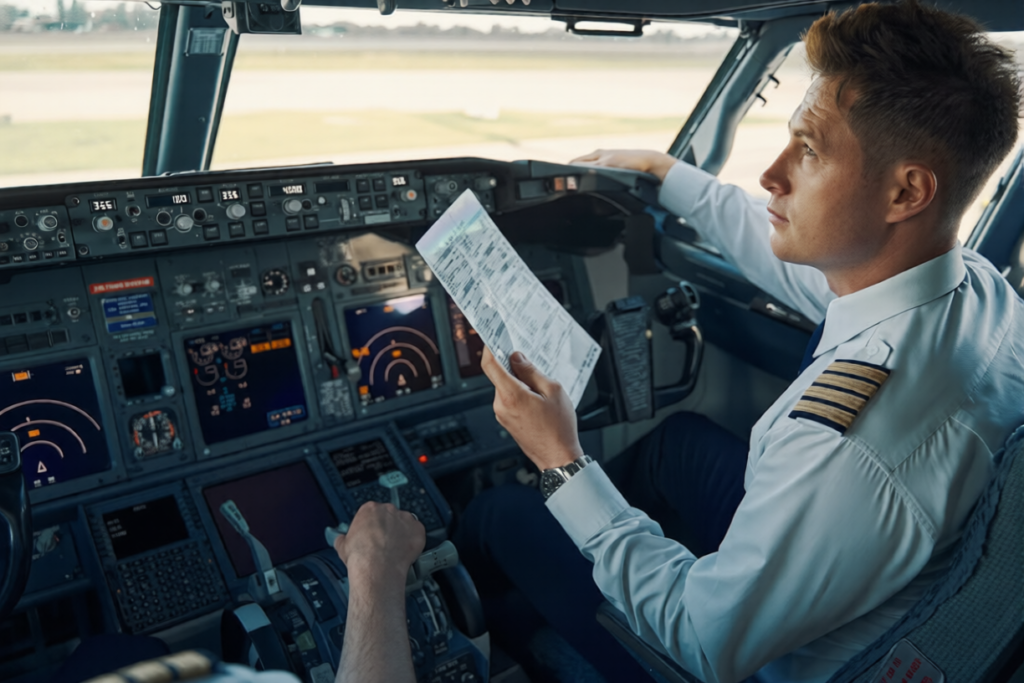
In Europe, the route to an airline cockpit usually moves through several stages. A PPL, or Private Pilot Licence, is the private starting point. EASA explains that a PPL is for non-commercial flying and that, for a PPL(A), you typically need around 100 hours of theory and at least 45 hours of flight instruction. Applicants for a PPL must be at least 17 years old.
A CPL, or Commercial Pilot Licence, is the licence that allows you to move into professional flying, and EASA states that an applicant for a CPL must be at least 18 years old. An ATPL, or Airline Transport Pilot Licence, is the highest licence level, and EASA sets the minimum age for ATPL at 21. For a full ATPL(A), EASA requires 1,500 hours of flight time, including specific multi-pilot experience.
This is why many new airline pilots do not leave school with a full 1,500-hour ATPL already completed. In practice, they finish training with the licences, ratings, theory credits, and multi-crew training needed to apply for entry-level airline jobs, then build experience toward the full ATPL later.
Choose the right training route
Once the medical is sorted, the next decision is your training path. In Europe, most aspiring airline pilots end up choosing between an integrated ATPL route, a modular route, or an airline-linked cadet or MPL-style pathway offered through a school or airline partner.
The integrated route is the most direct. It is designed for people with little or no flying experience and takes them through theory, flight training, instrument flying, multi-engine work, and multi-crew preparation as one structured full-time course. Schools such as GreyBird, European Flight Academy, BAA Training, and FTEJerez all market this as a start-to-finish path into commercial aviation.
The modular route is more flexible. Instead of doing everything as one package, you complete training in pieces. That often means starting with a PPL, building hours, and then adding the commercial and instrument parts later. It can spread the cost over a longer period and may suit people who need more flexibility, but it also requires more self-management.
Then there are cadet-style or airline-linked routes. Wizz Air Pilot Academy is a clear example of this. It is built as an airline-linked pathway, with a deferred-fee element and a defined route toward joining Wizz as a pilot trainee if requirements are met. These programmes can look attractive because they are more tied to airline recruitment, but they also tend to come with stricter terms and less flexibility.
What schools usually require
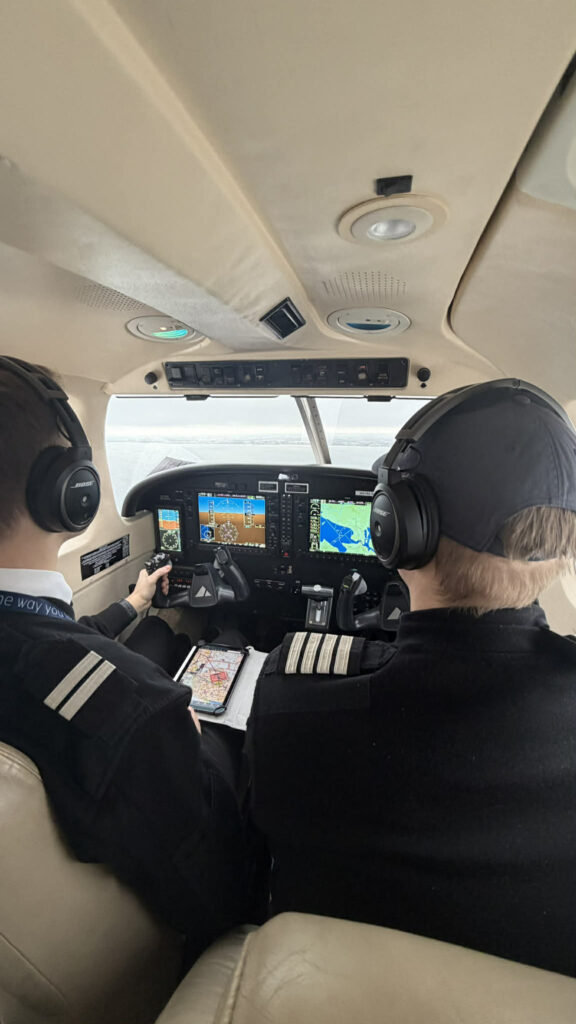
The exact entry requirements vary, but the patterns are similar across Europe. GreyBird requires applicants to be at least 18, have completed compulsory school, hold a valid Class 1 medical, and pass the academy’s admission process. European Flight Academy trains candidates with no previous flight experience and runs its own application and selection structure. FTEJerez requires applicants to be at least 17½, be fluent in English, have suitable academic qualifications, and be in good health for a Class 1 standard.
BAA Training’s integrated pathway similarly expects candidates to meet educational standards, complete assessment, and be eligible for an EASA Class 1 medical. Wizz Air’s academy route is also aimed at people with little or no previous experience, but it adds its own programme-specific conditions and payment terms.
The practical takeaway is simple: most schools want some combination of age eligibility, English proficiency, academic readiness, and medical fitness. So if you are serious about becoming a pilot, these are the boxes you need to check first.
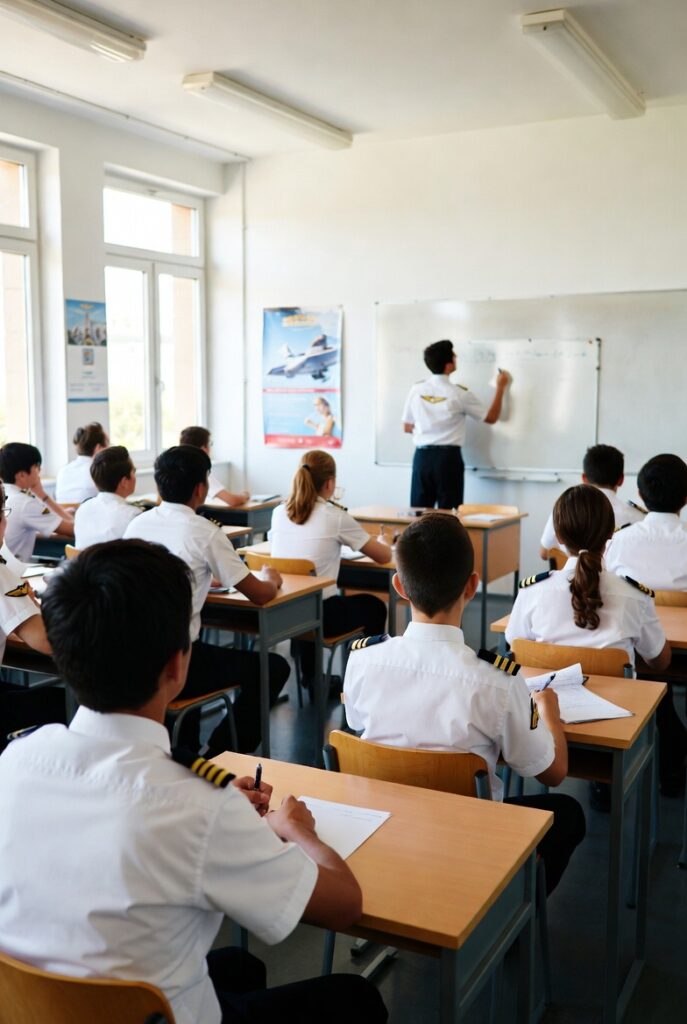
How long does it take to become a pilot?
The answer depends on the route you choose. A private licence is much shorter, but the professional route takes longer and is usually full-time if you choose an integrated programme. GreyBird states that its integrated pilot education takes 22 to 24 months. European Flight Academy presents its training as a full ab-initio path, and its training-cost structure is split into six payments across the major phases of training. BAA’s integrated programme is designed as a fast-track commercial route, while Wizz’s academy is structured as a full-time integrated programme with staged fees.
So, if you want the realistic version rather than the Instagram version, most full-time airline-oriented training routes in Europe take roughly 18 to 24 months, and that is before you factor in airline assessment timing, type rating arrangements, or delays caused by weather, aircraft availability, or exam scheduling.
How much does pilot training cost in Europe?
This is the part that makes many people blink twice at the screen. Pilot training in Europe is expensive, and the price varies a lot depending on the school, the structure, and what is included. As checked on 10 March 2026, GreyBird lists its total training price at €105,000, paid in modules as you progress.
European Flight Academy lists the basic training costs in Germany across six instalments that total €120,000.
BAA Training shows €108,000 for its integrated programme with type rating and base training, while its cadet programme with job-guarantee structure starts at €103,000, excluding items such as the initial assessment, EASA Class 1 medical, ICAO English, CAA exams, and accommodation or living costs.
FTEJerez describes its AFOP as an all-inclusive course and states that no additional fees apply to the course price itself. FTEJerez lists their AFOP program training cost at €129.500 which includes:
- Full board accommodation in Jerez, inclusive of VAT, during the 62 training weeks (59 training weeks for UK CAA Licence).
- Full uniform, except shoes.
- First attempt at ground and flying exams.
- Renewal of the Class 1 medical.
- Training material, as detailed in Annex B of the Formal Letter of Offer.
- Landing and Navigation fees
Wizz Air Pilot Academy uses a different model. The Wizz careers page states that the first instalment is €13,950, while the advanced training cost is €40,000, which may be reduced to €25,000 and repaid over five years if the graduate remains employed under the programme terms.
That means there is no honest single answer to “How much does pilot training cost in Europe?” A realistic range for airline-focused training routes is often somewhere around the high five figures to low six figures in euros, depending on the school and what is bundled into the programme.
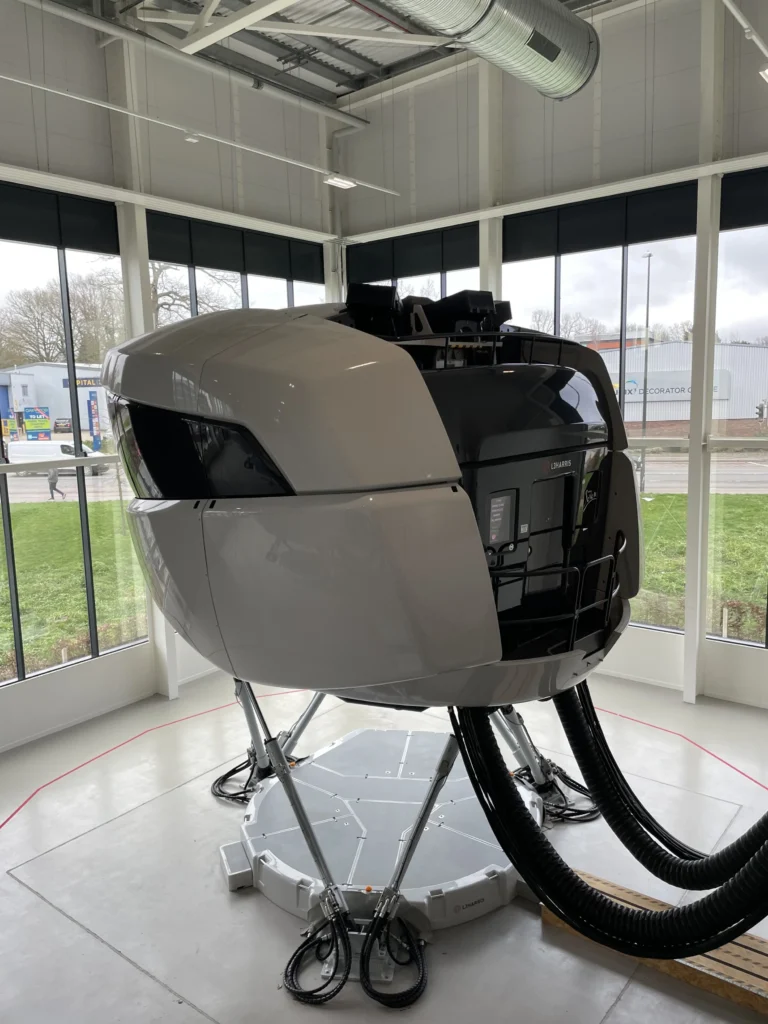
What happens during training?
A full airline-oriented course is not just flying around in good weather wearing sunglasses and feeling cinematic. Training usually combines theory, simulator work, single-engine flying, instrument training, commercial manoeuvres, multi-engine flying, and multi-crew preparation. EASA also incorporates upset prevention and recovery training into modern professional pilot development, and schools then build their own programme structure around those regulatory foundations.
At GreyBird, the programme ends with APS MCC, and the school presents this as the final part of its integrated airline preparation. FTEJerez also offers APS MCC and advanced training as part of its broader airline-focused structure.
The key point here is that airline preparation is not just about passing flying tests. It is also about learning how to operate in a multi-crew environment, handle procedures, manage workload, and meet the standard airlines expect from day one.
What happens after flight school?
This is where a lot of “how to become a pilot” articles suddenly go quiet, like they have walked into the wrong briefing room. In reality, finishing school is not the final step. It is the start of the employment phase.
Some graduates move straight into airline recruitment pipelines. Others build time as instructors or in other commercial roles first. GreyBird explicitly lists job possibilities after graduation such as medium-aircraft First Officer roles and flight-instructor work. FTEJerez puts strong emphasis on airline partnerships and career support throughout and after training.
Airline requirements can be very specific. SAS, for example, lists a valid EASA Class 1 medical, a valid CPL(A) or MPL, ICAO English Level 5 or 6, an MCC course, EU work rights, and a clean criminal record for its cadet First Officer path. SAS also notes that non-Scandinavian EASA licences are accepted but must be converted before course start. For its experienced First Officer path, SAS adds a requirement of 400 hours or more on CS/FAR 25 aircraft. That tells you something important: flight school gets you into the game, but airline hiring is its own stage. The better your training route matches the market you want to enter, the smoother transition usually becomes.
How to choose the right school
There is no single best school for everyone. The better question is: best for what? Best price, best structure, best airline links, best flexibility, or best fit for your finances and work-rights situation?
If you want a Scandinavian-style integrated programme with a clearly listed modular payment structure, GreyBird is a strong example. If you want a Lufthansa-linked premium route, European Flight Academy is one of the most obvious names. If you are looking for a Spain-based premium integrated environment with strong airline branding, FTEJerez is a major option. If you want a lower-upfront airline-linked scheme, Wizz Air Pilot Academy becomes relevant. And if you want a more commercial training provider with several programme formats, BAA is a serious contender.
The mistake would be choosing only on headline price. A cheaper route is not automatically cheaper if it excludes medical, exams, accommodation, or later training stages. A more expensive route is not automatically better either. You need to compare what is actually included, how airline-focused the programme is, and what kind of support exists after graduation.
The biggest mistakes future pilots make
The first mistake is leaving the Class 1 medical too late. It should be one of the first things you check, not one of the last.
The second is misunderstanding the licence path. Many beginners think they will finish school with a full unrestricted ATPL in hand, when in reality the full ATPL requires 1,500 hours.
The third is focusing only on tuition and ignoring the rest of the cost. Depending on the school, medicals, assessments, accommodation, exams, and later training elements may or may not be included.
The fourth is picking a school without thinking about the job market afterward. If your goal is an airline cockpit, then it makes sense to look closely at schools that are structured around airline entry, not just licence delivery.
Final thoughts
So, how do you become a pilot in Europe? In simple terms, you confirm that you can pass the Class 1 medical, choose the right training route, complete your theory and flight training under EASA standards, and then move into the first-job phase with the licences and qualifications airlines want. After that, you build experience toward the full ATPL.
It is a demanding path, but it is not a mystery. The hard part is not understanding the steps. The hard part is choosing the right version of the path for your budget, your timeline, and your target airline market. That is also why the smartest future pilots do not ask only “How do I become a pilot?” They ask, “Which route gives me the best chance of actually becoming employable?”
Frequently Asked Questions
Can you become a pilot without a degree?
Yes. In Europe, you usually do not need a university degree to begin pilot training. Many schools require secondary-level education instead. For example, GreyBird says applicants must have passed the 9th grade elementary school exam, and BAA lists “secondary or higher” as its education requirement.
How old do you have to be?
Under EASA rules, you must be at least 17 for a PPL, 18 for a CPL, and 21 for a full ATPL. Some schools may allow you to start training before that final licence age, but the licence minimums themselves come from EASA.
Do you need perfect eyesight?
No. You do not need perfect eyesight to become a pilot. GreyBird states this directly, and EASA medical rules allow certain limitations on Class 1 medical certificates in some cases rather than making it a simple yes-or-no issue.
How long does it take?
For a full airline-oriented route in Europe, a realistic full-time timeline is often around 18 to 24 months. GreyBird says its integrated course usually takes 22–24 months, European Flight Academy says around 24 months excluding type rating, and Wizz’s academy material says the ab-initio training is around 18 months, with the broader training process depending on programme stages.
How much does it cost?
A realistic range for airline-focused training in Europe is usually from the high five figures to low six figures in euros, depending on the school and what is included. GreyBird lists €105,000, European Flight Academy shows €120,000 basic training costs in Germany, and Wizz Air Pilot Academy lists €61,460 for ab-initio training plus separate advanced training costs.
Integrated or modular?
Integrated is usually the best fit if you want a structured, full-time path from little or no experience toward airline-ready training. Modular is more flexible and often better if you need to spread the cost or progress in stages. GreyBird describes integrated as the stricter, more structured route, while modular is more flexible and often longer in practice.
What is frozen ATPL?
“Frozen ATPL” is an industry term, not an official licence name. BAA explains that it refers to the stage where you have the commercial licence path and ATPL theory credit, but not yet the full unfrozen ATPL. To qualify for the full ATPL, you normally need 1,500 flight hours.